All About
SOVEREIGNTY, SECURITY, AND THE COST OF MISINFORMATION: AN OPEN LETTER TO SHEIKH GUMI ON TERRORISM AND INTERNATIONAL LAW
By Surajudeen Opeyemi Musa.
Dear Sheikh Gumi,
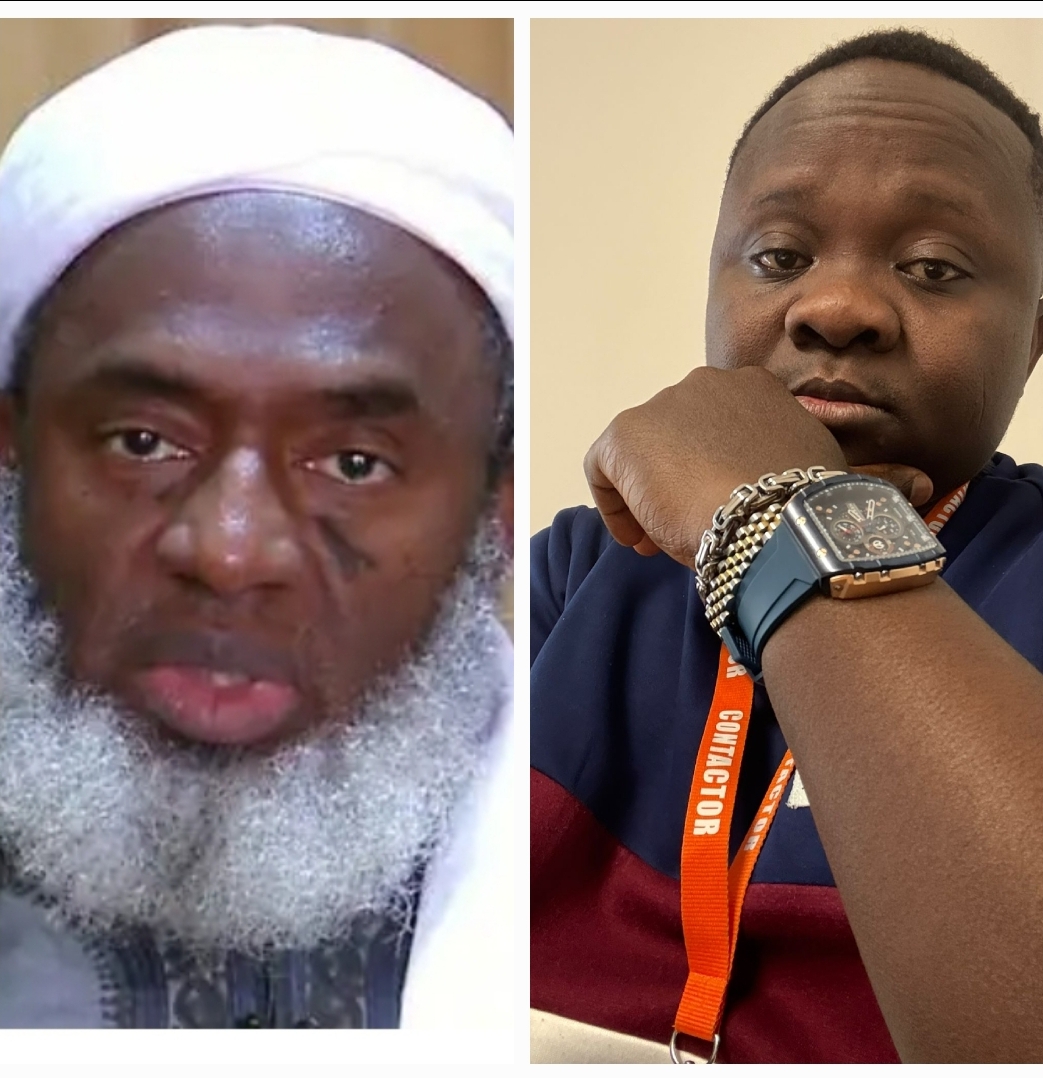
Your comment on the U.S.- Nigeria strategic military engagement of 25 December, 2025 reveals a troubling ignorance and limited grasp of the fundamentals of military intelligence, International Humanitarian Law (IHL), and contemporary foreign policy practice. It further raises serious questions as to whether your often asserted understanding of Islamic law and moral principles aligns with modern realities of state security, justice, and the protection of life and property of the citizenry.
As someone trained in Political Science, International Law, Conflict, Security, Strategic Studies and Human Rights, I find your assertions not merely inaccurate, but dangerous within the context of Nigeria’s present security emergency and your position reflects a fundamental misunderstanding of the United Nations Charter, which remains the cornerstone of the international legal order. While Article 2(4) prohibits the threat or use of force against the territorial integrity or political independence of any state, this provision is not absolute. It is expressly balanced by Article 51, which preserves the inherent right of individual and collective self-defence. Where Nigeria lawfully consents to military or intelligence cooperation to combat non-state armed groups threatening its survival, no breach of Article 2(4) arises.
More importantly, you misrepresented Article 2(7) of the UN Charter, which prohibits external intervention in matters essentially within a state’s domestic jurisdiction. This provision does not apply where a sovereign state invites assistance or where threats rise to the level of international concern, including terrorism and transnational armed violence. Dear Sheikh, from the standpoint of International Humanitarian Law, military operations against organised armed groups are lawful when conducted in accordance with established legal principles. Common Article 3 of the Geneva Conventions authorises state action against non-state armed groups in Non-International Armed Conflicts (NIACs), provided humane treatment is guaranteed. Additional Protocol II (1977) further affirms the right of states to conduct operations against armed groups engaged in sustained violence, subject to the principles of distinction, proportionality, military necessity, and precaution.
Equally sir, your commentary also fails to recognise the national scale of terror confronting Nigeria across all six geopolitical zones, a reality well documented in conflict and security studies, national and international archives:
- North-East: Boko Haram and ISWAP, entrenched in Borno, Yobe, and Adamawa, responsible for bombings, mass abductions, territorial control, and attacks on military formations.
- North-West: Organised bandit–terror networks across Zamfara, Katsina, Sokoto, Kaduna, Kebbi, and parts of Niger State, driven by kidnapping-for-ransom, arms trafficking, and jihadist-linked financing.
- North-Central: Fulani Herdsmen, Armed militias and terror gangs in Benue, Plateau, Niger, Nasarawa, and Kogi, engaging in mass killings, population displacement, and systematic disruption of food production.
- South-East: Armed separatist militias and criminal enforcers carrying out arson, targeted assassinations, attacks on police, military formations, correctional facilities, and violent enforcement of illegal orders.
- South-South: Militancy, oil theft syndicates, and armed criminal networks undermining energy security and sustaining illicit economies and illegal arms trafficking.
- South-West: Fulani herdsmen, bandits, kidnapping rings, armed gangs, and trans-regional criminal cells operating along highways, forests, and border corridors, threatening commerce, education, and internal mobility.
Despite your public advocacy and calls for engagement with armed groups, these factions have terrorised virtually every segment of Nigerian society. Through killings, bombings, kidnappings, arson, ransom-taking, and forced displacement, they have caused the collapse of agriculture in many areas, turned transport corridors into death traps, shuttered schools, and inflicted massive losses on national productivity. At critical moments of the nation’s insecurity, military generals were assassinated, camps and barracks attacked, and armed groups boldly broadcast live operational movements on social media, openly mocking the authority of the Nigerian state.
From an intelligence perspective, these threats are not isolated. They form part of regional jihadist and criminal ecosystems spanning the Sahel and Lake Chad Basin. Their movements, logistics, recruitment, and financing are tracked through regional and continental intelligence cooperation, including ECOWAS frameworks, the African Union, the Multinational Joint Task Force (MNJTF), and allied international intelligence partners.
It is therefore intellectually dishonest to imply that the absence of prior media disclosure renders an action lawful. Security operations are inherently confidential, and the public sees only their outcomes, not the planning behind them. From the perspective of national security and state theory, public rationalisation or defence of violent non-state actors by influential figures represents a profound non-kinetic threat to sovereignty. Such statements embolden armed groups, weaken deterrence, mislead public perception, and risk radicalising vulnerable youths. In a state with functioning institutions and the rule of law, such conduct would attract serious investigation and prosecution under national security and counter-terrorism laws—making the legal accountability of someone like Gumi not just conceivable, but unavoidable.
Dear Gumi, this is not an endorsement of government; it is a corrective to the dangerous assumptions and assertions you have made, assertions that have sown confusion and risk among the majority of Nigerians mostly, the youth populace. Your public rationalisation of violent non-state actors has emboldened armed groups, undermined deterrence, and exposed countless citizens to harm, all while flaunting rational security principles. Yet, the institutions of the state have, through neglect or inaction, allowed these utterances to persist, further amplifying their impact. One can critique governance failures while still acknowledging the legality and necessity of intelligence-driven counter-terror cooperation; a standard you have consistently undermined through reckless advocacy. I have consistently maintained that for Nigeria to achieve meaningful security outcomes, the protection of human life must take precedence over sentiment, ethnicity, religious affiliation, or ideological scholarship. Security policy must remain insulated from religion, ethnicity, and partisan politics, and must instead safeguard the operational integrity of the state, grounded in neutrality, authority, and the monopoly of legitimate force.
Finally, let it be stated unequivocally that any coordinated strike conducted without the consent or intelligence cooperation of the Nigerian state would constitute a violation of international law under Articles 2(4) and 2(7) of the UN Charter. The absence of such a breach fundamentally invalidates your argument, sir. What Nigeria truly requires are strong institutions, disciplined intelligence alliances, and responsible public voices, not rhetoric that sanitises terror or erodes national resolve.
I remain hopeful for a Nigeria governed by robust institutions, where security discourse is guided by law, intelligence, and the national interest, rather than by misplaced moral authority or reckless advocacy, sir.
Make I stop here jooor!
Surajudeen Opeyemi Musa
Political Scientist and International Law Scholar (Conflict, Security & Human Rights)
Ekiti State, Nigeria
musasuraj003@gmail.com