Before this period, Ekiti towns were largely independent kingdoms. They sometimes fought one another, but they did not live under a single central government. The pressure from Ibadan pushed them toward a new kind of unity.
The usual starting point is 1877 at Okemesi (then often called Imesi-Igbodo). Prince Fabunmi of Okemesi clashed with the local Ibadan ajele. After an insult during a festival, Fabunmi attacked the ajele and his household. The uprising spread as other towns expelled or killed Ibadan officials. Fabunmi then called warriors and rulers across Ekiti and neighbouring areas to join a common revolt..
The Confederacy.
The alliance that followed was called Ekiti Parapo. It was not only Ekiti. Ijesha, Igbomina, Akoko, Efon and others joined at various points. Support also came from Ekiti and Ijesha people in Lagos, sometimes called the Ekiti Parapo Society: traders and returnees who helped raise money and buy modern firearms through coastal routes, especially the Ondo road.
Early command is associated with Fabunmi. Later the celebrated Ijesha commander Ogedengbe Agbogungboro became a leading general of the confederate forces, with other Ekiti war leaders such as Faboro of Ido among the prominent names.
The conflict is commonly dated from 1877/1878 to 1886, with fighting and occupation issues lingering until about 1893. Many writers treat it as a roughly 16-year war, one of the longest in Yoruba history.
It is also called the Kiriji War. “Kiriji” is an onomatopoeic name for the booming sound of large-muzzled guns and cannons used in the campaigns. Ibadan forces often held positions around Igbajo; the Ekiti-Parapo side is strongly associated with camps around Imesi-Ile. Aare Latoosa, the Ibadan military ruler and Aare Ona Kakanfo, died during the war period and was taken home from the Igbajo camp.
The war did not produce a simple battlefield knockout. It became a long stalemate of fortified camps, firearms, and exhaustion. What it did achieve was to break Ibadan’s hold over the eastern kingdoms.
A major peace agreement was signed on 23 September 1886 at the Imesi-Ile / Igbajo axis, with British colonial officials and Yoruba Christian mediators such as Rev. Samuel Johnson and Charles Phillips involved. The settlement recognised the independence of the eastern states from Ibadan control. Final winding-down of the wider Yoruba wars continued into the early 1890s as British power expanded.
- The war is remembered in Ekiti as a liberation struggle and as the moment when scattered kingdoms acted as one people. Historians often say it strengthened Ekiti ethnic solidarity. That memory later fed:
meetings of senior Ekiti obas, sometimes discussed in connection with the Pelupelu - 20th-century civic bodies such as the Ekiti National Association and Ekiti Progressive Union
- Institutions named after the confederacy, including Ekiti Parapo College (founded 1954)
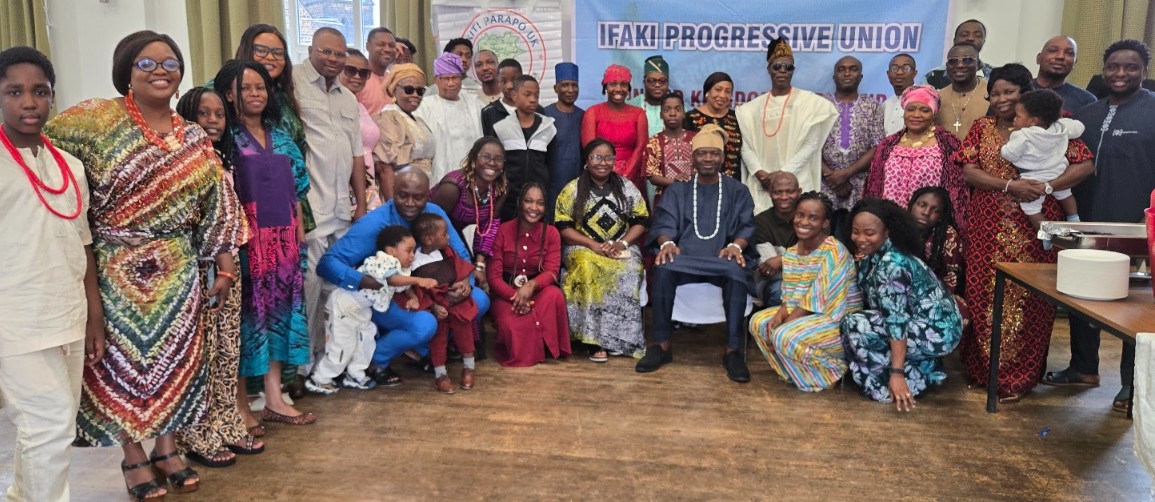
- today’s hometown and diaspora unions that still use the Parapo name, including groups like Ekiti Parapo UK.
So when a modern body calls itself Ekiti Parapo, it is drawing on that older idea: separate Ekiti towns standing together as one family.
The Kiriji peace settlement was not a single battlefield handshake. It was a British-mediated “Treaty of Peace, Friendship and Commerce”, drafted in Lagos in June 1886, then proclaimed at the Kiriji / Imesi-Ile front on Thursday 23 September 1886. The war’s political end is usually dated to that proclamation; the last camps did not fully break up until 1893.
By 1886 both sides were exhausted. Earlier peace attempts, including Rev. J. B. Wood’s missions in 1884–85, had failed. Governor A. C. Moloney of Lagos then sent two Yoruba CMS missionaries, Rev. Samuel Johnson and Rev. Charles Phillips, as envoys to the interior. They brought accredited messengers from the warring courts back to Lagos. Between 31 May and 4 June 1886 those envoys signed the treaty on behalf of their principals. Johnson and Phillips then returned inland to collect the actual seals and signatures of kings and war chiefs.
On 23 September, Special Commissioners Henry Higgins (Acting Colonial Secretary) and Oliver Smith (Queen’s Advocate) proclaimed peace at the battlefield. Johnson and Phillips interpreted. Ogedengbe for the Ekitiparapo and Osungbekun, Balogun of Ibadan, swore friendship. A salute was fired; the text was read in English and Yoruba. Local memory adds that the twelve articles were put in a bottle and buried, and that two peregun trees were planted to mark the Ibadan and Ekitiparapo sides.
The named parties were wide: the Alaafin of Oyo; Ibadan chiefs; Ekitiparapo rulers including the Owa of Ilesa, Oore of Otun, Ajero of Ijero, Olojudo of Ido and the Seriki of Ijesa; Ife chiefs; and others such as the Ogunsua of Modakeke.
It was a no-victor, no-vanquished document on paper. Ibadan was not destroyed; Ekitiparapo did not become a new empire. The real change was that Ibadan could no longer treat the eastern kingdoms as subject towns under ajele. That is why Ekiti tradition calls it a liberation treaty even though British officers wrote and enforced it.
At the same time, the treaty made the Governor of Lagos the referee. Parties agreed to follow his directions, give hostages, and accept his envoys. Peace came with a colonial door already half open. The later 1888 Alaafin–Queen Victoria treaty, sometimes confused with Kiriji in popular writing, is a different document: a separate Oyo–British friendship and trade pact, not the Kiriji camp settlement.
The monument at Imesi-Ile / Igbajo still presents the twelve articles as the text that “ended the war.” Historically, those articles ended the Kiriji deadlock and recognised eastern independence, while leaving enough unfinished business for British power to finish the job seven years later.
Sources: online websites