All About
IJERO-EKITI: A HERITAGE OF ODUDUWA, AJORO AND Greatness.
Ijero-Ekiti is a land deeply rooted in the history, culture and royal heritage of the Yoruba people. According to Ijero oral tradition, the people of Ijero trace their ancestry to Ile-Ife and Oduduwa, the progenitor of the Yoruba race. The history of Ijero is therefore not merely the story of a town; it is a story of migration, royalty, courage, adventure, unity, enterprise and an enduring commitment to collective progress.
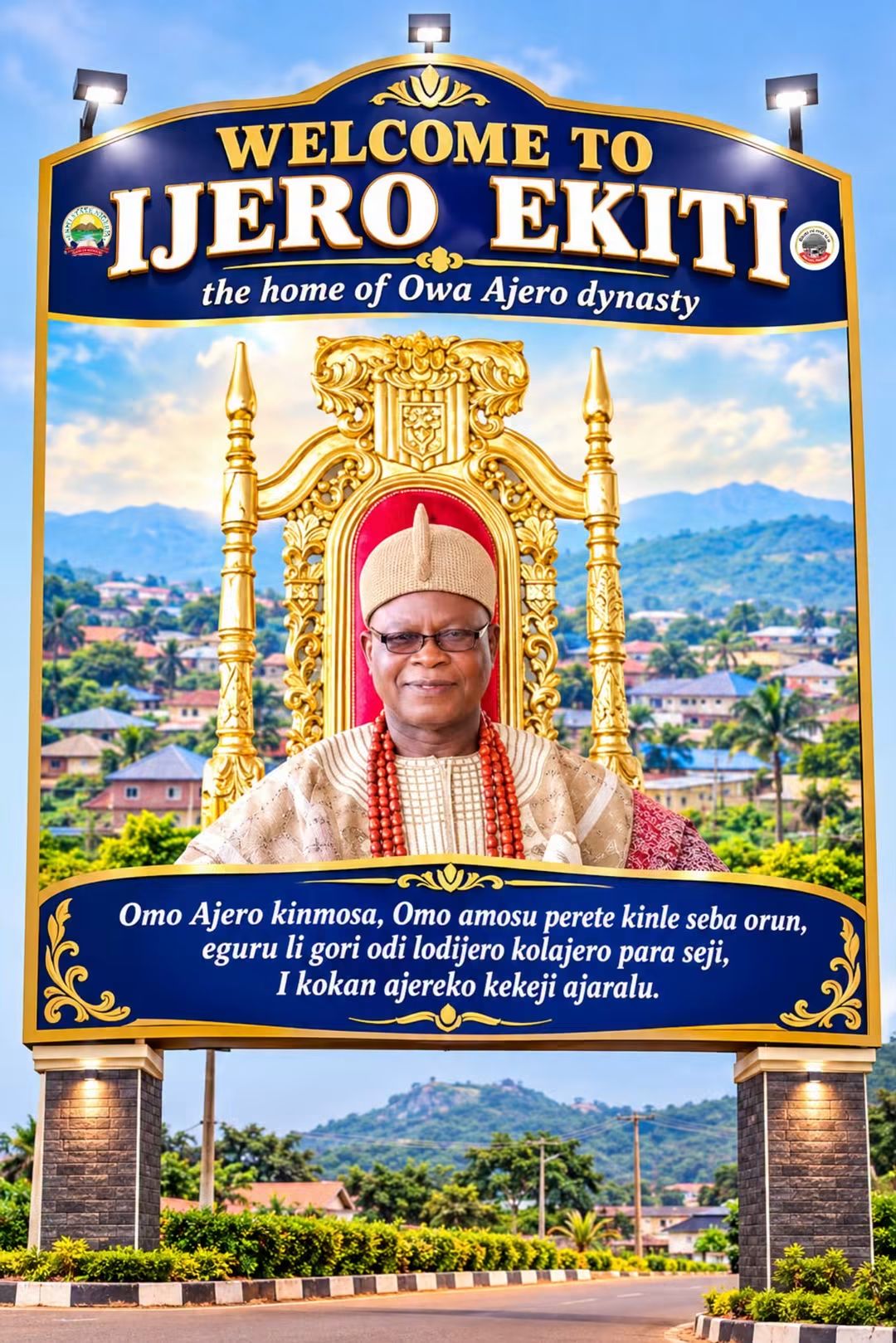
At the heart of Ijero history is Ajero, regarded in Ijero tradition as the fourth direct son of Oduduwa. Following the historic council meeting known as Ajoro, the royal princes embarked on journeys to establish new kingdoms. Ajero left the royal home at Ile-Ife and journeyed southwestward toward the lagoon, an experience that earned him the renowned cognomen “Ajero Ki Mo Osa”—Ajero, the one who knows the lagoon.
Ajero and his people subsequently embarked on a series of migrations and settlements. Among the places associated with their journey were Ita-Ijero in Ile-Ife, Atowose, Oro (present-day Iloro-Ekiti), Ilukuno and eventually the present-day Ijero settlement. These movements demonstrate the resilience and adventurous spirit that became an important part of Ijero identity.
ILUKUNO-EKITI AND THE FOUNDATIONS OF IJERO
One of the significant chapters in this history is the establishment of Ilukuno-Ekiti. Ajero first settled at Atose, between present-day Aramoko and Ijero, before eventually establishing himself at Ilukuno.
Ajero married Ose, and their union produced two sons, Apa and Ogbe. Apa became the first ruler of Ilukuno and was known as the Olulokun of Ilukuno. After his death, his younger brother Ogbe succeeded him.
The tradition surrounding the name Ilukuno is associated with the expression “Ilu kun o”, reflecting the idea of a town becoming full and the need to establish another seat of kingship. Other accounts also associate Ilukuno with wealth, prosperity and the flourishing agricultural and trading activities of its people.
Ajero Ogbe was a farmer, hunter and adventurer. His activities extended into the virgin lands that later became Ijero and Ikoro. This history is reflected in the traditional praise name:
“Ogbe ki gbe Ikoro ni gbe Ijero”
—Ogbe, the planter of Ikoro and Ijero.
Ogbe therefore occupies a central place in the traditional history of Ijero as a pioneer, settler and founder.
THE BIRTH OF IJERO KINGDOM
The present-day Ijero settlement was originally associated with the farming activities of Ogbe. According to oral tradition, Ogbe consulted the Ifa oracle concerning the future of the settlement. Following the counsel he received, he decided that the farmstead should become a permanent settlement.
With consultation among his people and kinsmen, the settlement was named Ijero, in remembrance of Ita-Ijero in Ile-Ife, regarded as the ancestral root of the Ijero people.
The establishment of Ijero was more than the creation of another settlement. It represented the continuation of the philosophy of Ajoro—a tradition associated with consultation, collective decision-making, unity and communal responsibility.
This spirit became an important part of Ijero identity: a people who consult, deliberate, build together and work toward the advancement of their society.
When Ogbe moved his seat to Ijero, the settlement grew in importance. Ijero became a centre of traditional administration, culture, commerce and governance within the Ijero kingdom. According to the tradition provided, the kingdom eventually expanded to encompass numerous towns and villages and entered a period of considerable influence and prosperity before the Kiriji War of 1877–1893.
IJERO AND THE ROYAL HERITAGE OF ODUDUWA
Ijero tradition also maintains a close relationship between Ajero, Alara and Orangun, who are regarded as uterine brothers and descendants of Oduduwa. The Alara is associated with Aramoko, the Ajero with Ijero, and the Orangun with Ila-Orangun and Igbomina.
This tradition places the Ajero throne within the broader network of Yoruba royal institutions whose ancestral traditions are connected to Ile-Ife.
The royal institution remains central to Ijero identity. According to tradition, Ajero kings are crowned at the Para Oduduwa shrine, with the original crown said to have been brought from Ile-Ife. The connection with Ile-Ife is further reflected in the relationship between the Ajero and the Ooni during the Olojo festival.
These traditions demonstrate the sacred and historical significance attached to the Ajero throne.
THE SPIRIT OF AJORO
Perhaps one of the most important lessons in the history of Ijero is the philosophy of Ajoro.
Ajoro represents consultation, collective wisdom, unity and the belief that the progress of a community is a shared responsibility. The pioneers of Ijero were not remembered only for the land they occupied, but also for the principles with which they built their society.
They were farmers, hunters, traders, craftsmen, traditional leaders and adventurers. They confronted unfamiliar environments, migrated when circumstances demanded it, established new communities and created institutions that enabled their descendants to flourish.
That spirit remains relevant today.
Ijero is more than a geographical location. Ijero is a people. Ijero is a heritage. Ijero is a royal tradition. Ijero is a story of courage and resilience. Above all, Ijero is a continuation of the Ajoro spirit, nsere o Ekiti Kete.